
When I was a little kid, my parents introduced me to the Dragonriders of Pern by Anne McCaffrey. To this day I still love the series, though I’ll admit that I only read the original trilogy – Dragonflight (1968), Dragonquest (1970), and The White Dragon (1978). They discuss several of my very favorite subjects, including telepathy, time travel (which I’ll write about in more depth under “T”), and of course, dragons.
The series is set on the fictional planet of Pern. For centuries the planet has been plagued by Threads, an alien spore that falls from the sky and devours all organic matter. Their one and only defense against the Threadfall are the Dragonriders of Pern, who tear through the skies torching the enemy on their fire-breathing dragons. But these magical beasts can do so much more than that.
They also have the ability to teleport from place to place in the blink of an eye by passing through the “between”. It’s a place of cold and nothingness, but by crossing the Between, dragons are able to teleport themselves – and their riders – anywhere. Spoilers: In the first novel (Dragonflight), they further discovers the dragons can jump between time, as well as place. Though this discover comes quite by accident, they’re able to utilize this ability to time-travel in order to save Pern from a Thread attack.
However, the most interesting feature of the series is the telepathic connection between dragons and their riders. Upon hatching, dragons immediately imprint on a boy or girl, who then become their bond-mates (or riders); they remain inextricably linked for the rest of their lives. The bond is largely empathetic, allowing them to read one another’s thoughts and emotions. Riders whose dragons have died are said to be half-men, a shadow of their former selves. Riderless dragons frequently commit suicide by passing into the between. The bond between man and beast is, by far, the most interesting and memorable aspect of the series.And one that I discovered made its way into another series many years later.
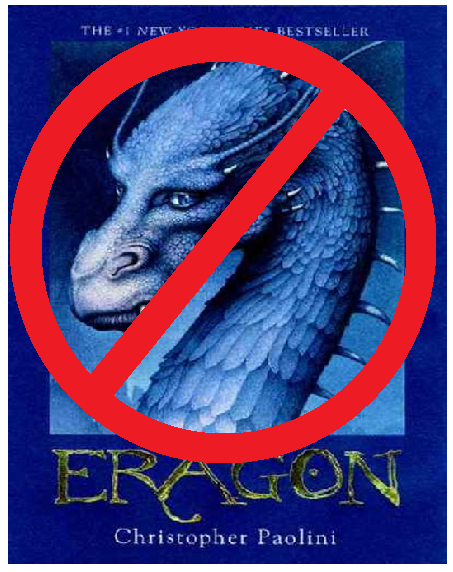
Fortunately, I’m not the only one who’s commented on Paolini’s literary piracy; however, most critics focus on the similarities between The Inheritance Cycle and big names like Lord of the Rings or Star Wars. But MaCaffrey fans know the truth about Paolini’s “best selling” novels. So if you ever want to read a redundant, and ill-written, dragon series, check them out.
__________________________________________________________________________________
This post is part of the Blogging A through Z Challenge 2012. My theme is (in case you didn’t already guess) science fiction. Stay tuned for the rest of the alphabet, and if you’d like to check in on the rest of the participants, simply click here.


.jpg)


